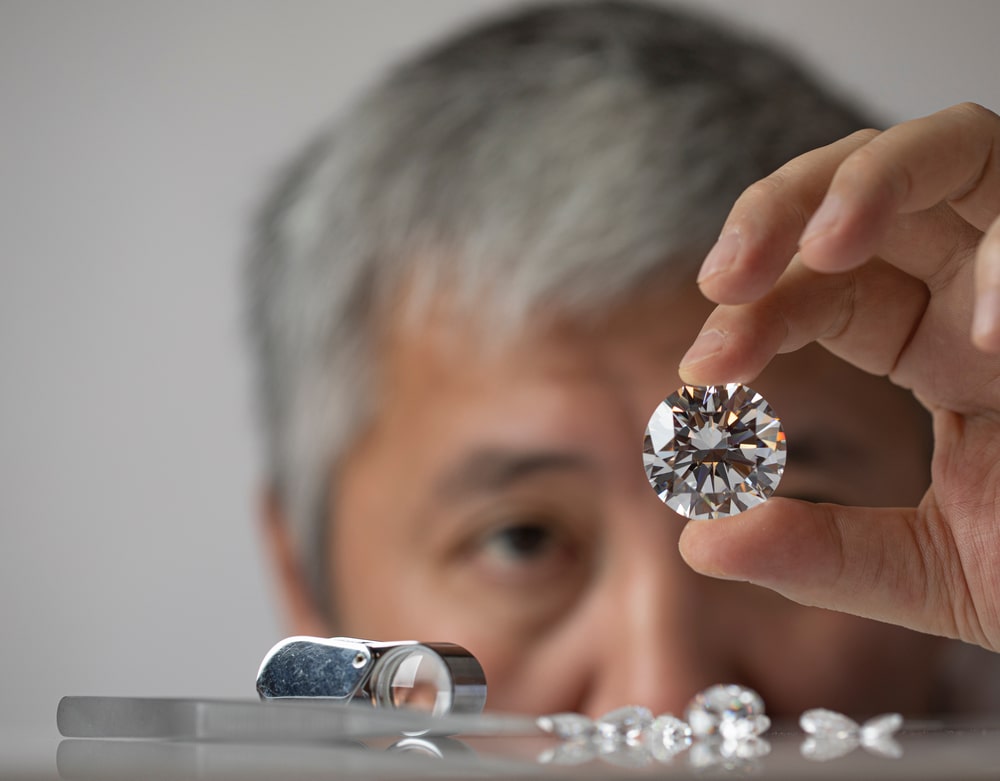

When it comes to diamonds, most of us think of sparkle, romance, and maybe a hefty price tag. But here’s the twist—diamonds don’t always come from deep inside the Earth anymore. Today, you’ve got options. And if you’ve been poking around the jewellery world, you’ve probably stumbled across the big debate: HPHT vs CVD.
Now, don’t roll your eyes just yet. This isn’t going to be a boring science lecture. Let’s actually talk about what these diamonds mean for your jewellery box, your wallet, and maybe even your conscience.
Diamonds With a Backstory
Think about it for a second. When was the last time a piece of jewellery really made you stop and wonder where it came from? For a lot of people, diamonds were always “from the ground.” Mined. Dug out with tons of rock and sweat. That’s the story.But the new wave of diamonds is… different. They’re grown. Made in labs. Not in a sketchy way, but in a way that replicates the Earth’s natural process. The only difference? Instead of millions of years, it takes weeks.That’s kind of wild, right?And here’s where the two main characters step in: HPHT (High Pressure High Temperature) and CVD (Chemical Vapor Deposition). These are just fancy names for the methods scientists use to grow diamonds. Honestly, the names sound like something out of a sci-fi film. But at the end of the day, it’s all about producing the same glittery stones people have been swooning over for centuries.
HPHT vs CVD – The Breakdown
Alright, let’s get into it. If you’re shopping for lab created diamonds, you’re going to see these two terms everywhere. Here’s the quick and dirty version:
-
HPHT Diamonds
- Made by mimicking the Earth. Crazy amounts of heat and pressure.
- Think of it as “natural-style” diamond growth, just sped up.
- Known for really good clarity and sparkle.
-
CVD Diamonds
- Created in a chamber with gases. Carbon sticks to a tiny diamond seed and slowly builds up.
- More precise control, which means fewer impurities.
- Often better for larger, flawless-looking stones.
To put it simply: HPHT is brute force, CVD is precision craft.
Now, does it really matter to you which one you pick? Honestly, not always. Both are 100% real diamonds. They’ll both test as diamonds, they’ll both sparkle under candlelight, and your friends won’t know the difference. The only people who really care are gem nerds, jewellers, and maybe you if you’re curious about the story behind your stone.
What People Are Actually Choosing
Here’s the fun part. Trends are shifting.
- Some buyers go for HPHT because they want something that feels closest to the Earth’s process. “If I’m getting a lab diamond, at least let it grow like it would underground,” is the vibe.
- Others lean toward CVD because they love the tech-y side of it. It’s kind of futuristic. Plus, CVD diamonds can be grown with fewer visible imperfections.
And then there’s the budget angle. Let’s be real—lab diamonds are usually 30–50% less than mined diamonds. That means more bling for the same budget. HPHT vs CVD doesn’t usually create a huge price gap, but sometimes CVD comes in slightly cheaper for larger stones.
The trend I’ve noticed? Couples who want bigger, cleaner diamonds are leaning CVD. But if you’re sentimental and like the “Earth-like” process, HPHT feels more poetic.
A Little Local Flavor
Now, here’s where it gets interesting. In some cities—like New York, London, or even Hong Kong—jewellers are leaning harder into the lab diamond story. It’s become part of the sales pitch. “Sustainable, modern, future-facing.”
But in smaller markets, people still squint and ask, “Wait, are these even real?” It’s funny because the science is solid, but the perception is still catching up.
What’s unique here is that the choice between HPHT and CVD isn’t just about science. It’s about how much people buy into the narrative. Some folks love the “grown with technology” angle. Others prefer something that feels closer to nature.
At the end of the day, it’s all diamonds. Just with a slightly different backstory.
How the Magic Happens
Okay, let’s not go too textbook here, but if you’re the kind of person who loves knowing how things work, here’s the gist:
HPHT Process
- Start with a diamond seed.
- Put it under insane pressure and crazy heat (we’re talking over 1,500°C).
- Carbon melts and crystallizes around the seed.
- A few weeks later, voilà—you’ve got a diamond.
CVD Process
- Place a diamond seed in a chamber.
- Fill it with gases (like methane) and zap it with microwaves.
- The carbon atoms break free and stick to the seed.
- Slowly, the diamond “grows,” layer by layer.
Sounds almost like baking versus 3D printing, doesn’t it? One’s more raw power, the other is slow and precise. Both work. Both create diamonds.
So, Which One Should You Choose?
Here’s the thing: if you’re buying a diamond, you’re not really buying “HPHT” or “CVD.” You’re buying sparkle, sentiment, and maybe bragging rights.
Do you care about telling people, “Mine was grown with pressure like the Earth’s core”? Go HPHT.
Do you prefer saying, “Mine was grown with cutting-edge tech”? CVD’s your guy.
But let’s be honest—most people won’t ask. They’ll just see the shine.
Final Thoughts
At the end of the day, whether you pick HPHT vs CVD created diamonds, the result is the same: a beautiful stone that carries a modern story. One that’s a little more affordable, a lot more ethical, and just as dazzling as the ones pulled out of the Earth.And maybe that’s the real point. A diamond isn’t just about its origin—it’s about the moments it represents. The proposal. The anniversary. The memory.So, if you’re torn between HPHT and CVD, don’t sweat it too much. Pick the one that feels right. After all, the sparkle’s the same.